Showing posts with label green infrastructure. Show all posts

Friday, December 21, 2012

Hurd Field PP

It's been awhile!

Link to a presentation on the recently constructed (September 2012) porous pavement retrofit project in Arlington, MA. The goal of the project was to provide water quality improvements for an existing parking lot adjacent to a waterway. 


Cross-sectional View of Porous Pavement System used at Hurd Field
Source: http://www.epa.gov/mysticriver/porouspavementproject.html

Good start to finish type presentation with useful data as well as nice photos to put things into perspective. I liked the last bullet on the presentation: "Pre-design - good understanding of soil mechanics and engineering (if incorrectly situated, performance and reputation suffer)". 

Very true and highlights how important site selection is. In addition to site selection and a good understanding of the subsurface conditions, it is important to have a grasp on the anticipated traffic volume, anticipated vehicle types and loads, etc. to spec the proper mix as well as determining the porous pavement thickness. Then, it's all about the maintenance!


Friday, October 5, 2012

Stormwater Wetlands (VIDEO)


Stormwater Wetland in the Bronx

Nice video on the newly constructed stormwater wetland at the New York Botanical Gardens. According to the NYCDEP Press Release, Southern Boulevard was subject to frequent flooding in the past among other related issues. Now, new catch basins have been installed to convey stormwater runoff into the constructed stormwater wetland prior to discharging into downstream waterbodies. 

  • Reduction of urban flooding - CHECK 
  • Treatment of stormwater runoff at the source - CHECK 
  • Reduction of downstream erosion - CHECK 
  • Reduction of CSO - CHECK 
  • Creation of open space - CHECK 
  • Increase in habitat diversity - CHECK 
  • Educational Platform - CHECK


Marrying natural principles in urban settings is what green infrastructure is all about. Enjoy!

Friday, September 28, 2012

It just won't work...

Hello everyone, 


My blog probably screams green infrastructure. There has been so much hype and many regulatory agencies now require developers to incorporate it into the design. As much as I am a proponent of it, there are times when it just won't work! You can't just blindly place bioretention areas, rain gardens, porous pavement, bioswales, etc. all over your site because it's cool or it's good marketing. Without strong investigation of the soils and site conditions and even longer term maintenance considerations, it can FAIL! 

The major component is infiltration. If the underlying soils are poor in terms of infiltration (generically speaking - C and especially D soils), how will infiltration work? If you have shallow groundwater, your system may be saturated at all times (hence groundwater separation). Also, on a volume based approach, remember you are not going to be detaining runoff generated from the 100 year storm event. You would be using these techniques to meet WQv requirements (in New York State, 90% rule), especially for bioretention areas, etc. Rule of thumb on volume based approach is the 95% rule (rainfall events < or = to the 95% percentile event). Another important consideration is your surrounding infrastructure. 

It's a bummer though when you have a large site with so much space for green infrastructure implementation, but its all C and D soils and after numerous boring logs, groundwater data and perc tests to confirm, it's just not feasible. Also, keep in mind that subsurface investigation needs to be well prepared. I remember one time when my geotechnical professor said to be very careful when encountering perched water table. It is very true. 

Anyways, a solid site assessment and early planning is key. Also, once it's successfully designed and installed, it's not over! Maintenance.... ooh.... the dreaded word.... I know most people hate the word maintenance like oil changes for a car. But this is a commitment to a more sustainable environment!

There was a good post on LinkedIn related to this matter titled "can green storm water designs aggravate basement flooding" under the Sustainable Stormwater Group. You should check it out. A lot of great points made in the discussion thread. 

Monday, September 10, 2012

Green Infrastructure Courses offered in NYC


Green Infrastructure Courses offered by Pratt Institute in NYC. I haven't seen a curriculum focused specifically on green infrastructure before. Pretty cool, eh? I tried attending one of the courses earlier in the year, but it was cancelled last minute. The program is being re-offered for the Fall semester.

Link to the course registration: Pratt Registration


Tuesday, July 10, 2012

Raindrops Keep Fallin' on my Head...

Random, but related...

Passaic River Basin Flood Preparedness Workshop
Very good presentations from the workshop focusing on the Passaic River Basin. Check out the link above. Presentations by the speakers can be downloaded by clicking their names (it took awhile for me to figure that out...). Many topics focusing on green infrastructure. 

From Presentation "USGS Involvement in the PRB" by Heidi Hoppe

I was reading an interesting article titled "The Energy Balance Method of Stormwater Management" from this month's STORMWATER MAGAZINE when this image captured my attention:
This office complex is on green infrastructure steroids! It's the Wetland Studies and Solutions, Inc.'s HQ building in Virginia. For more information, check it out on ASCE.

By the way, if you are a stormwater professional and have not subscribed to the Stormwater Magazine, you definitely should. Great articles and best of all, it's FREE! STORMWATER

Until next time, good night or good morning?


Wednesday, June 13, 2012

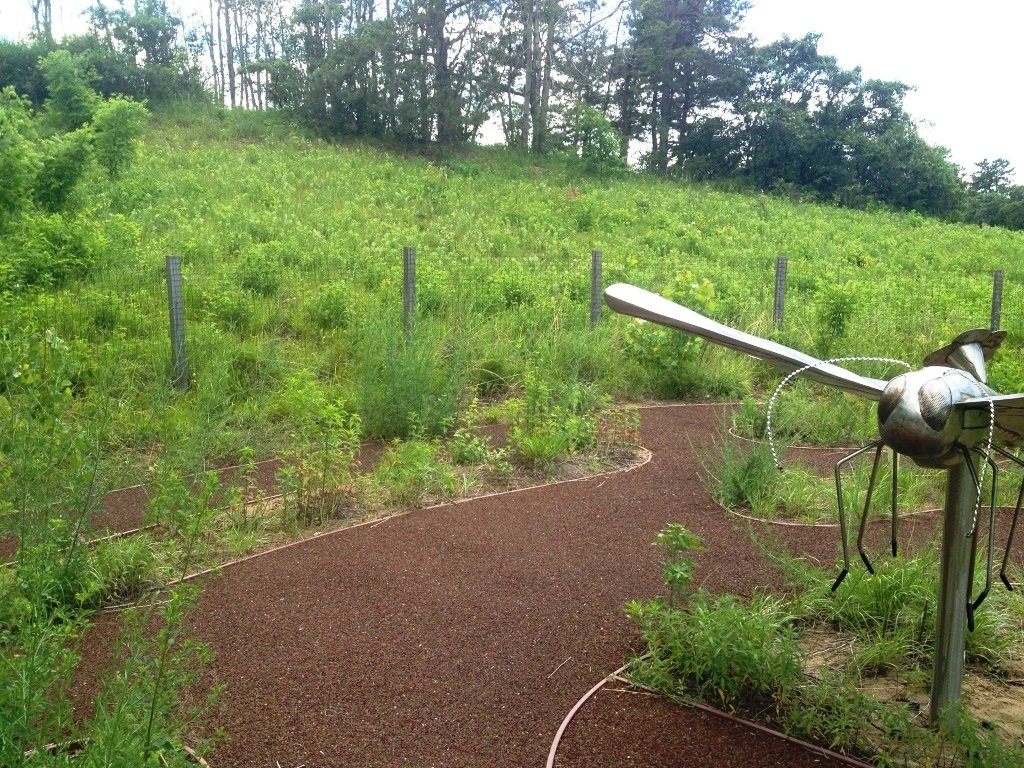
Porous Pavement Trail in Albany, NY

I stopped by the Albany Pine Bush Discovery Center today since it wasn't too far from my hotel. The site has some porous pavement trails that I wanted to check out after looking into some green infrastructure sites in the Hudson Valley. Based on information available from the NYSDEC website, this type of porous pavement mixture includes recycled tires. The function is the same concept as I discussed in my previous post, except the mixture may differ especially for proprietary products such as this one. There are many others as well that involve the use of recycled glass, etc.

For more information on this site, see this link: NYSDEC Albany Pine Bush Discovery Center Porous Pavement.

I am now off to my vampire oversight shift!

 Here are some photos I took:


Enjoy!

Saturday, June 2, 2012

Green Infrastructure for Passaic County?

I read some great news the other day on Passaic County! The article is available on North Jersey.

"Passaic County will be holding a workshop called "Green Streets 101" on June 11 to discuss how to better include green infrastructure into the county's capital planning."
 
I always had a strong interest in topics associated with the Passaic River Basin, which led me to focus my research project on it during my Master's. It's probably because one of my first WAH-TAH resources assignments as an engineer was to develop a hydraulic model for a portion of the river.

The Passaic River Basin
Image Source: PassaicRiver.org

As many from North Jersey may know, Passaic County is part of the Passaic River Basin, which is considered one of the most flood prone watersheds in the U.S. We see the flood damages every year on the news... billions of dollars worth of damages having occurred already since the early 1900's. It is a constant concern, especially for the residents, local businesses, etc.

Many studies have been prepared and proposed approaches (e.g., buyouts and elevated homes, levees, etc.) have been published. For example, the Passaic River Flood Advisory Commission published their 15-recommendations last year. Also, many may know of the USACE "Main-Stem" Plan proposed a long time ago, which consisted of an underground flood tunnel. The tunnel, however, has been very controversial due to the uncertainties in environmental impacts and costs.

I remember one of my professors telling us, "Engineers can solve any problem, just hand us a blank check". It's very true. A massive project such as the underground flood tunnel may be one of the large-scale, long-term solutions, especially with increasing development and urbanization and the growing costs associated with recovery. It's been done before. For example, Japan has massive underground flood tunnels. But, how can we fund this type of project (not considering environmental impacts)?

Green infrastructure to the rescue?! Well, no. Is it a strong player as part of a comprehensive solution? Yes! It's not going to be the answer to all problems, but, I am a firm believer that the widespread use of green infrastructure practices can help manage smaller and more frequent storms and provide a sustainable environment. AND, it's cost-effective.

So, great news!

"The workshop will be held from 7 to 9 p.m. at the Passaic County Public Safety Academy, 300 Oldham Road, Wayne. To RSVP for the workshop contact Jennifer Gonzalez in the Passaic County Planning Department at 973-569-4040 or jenniferg@passaiccountynj.org."

Wish I could attend, but I will be on an oversight job for the next two weeks in Upstate NY.

Enjoy!


Saturday, May 26, 2012

Porous (Permeable, Pervious) Pavement

Last year, I was part of a project where we designed a porous pavement system as part of the stormwater management plan, which was constructed late last year (videos at the end of this post if you do not want to read).

Typical Porous Pavement Cross-Section

 Image Source: NJDEP BMP Manual

As the name suggests, this type of asphalt or concrete mixture allows for infiltration of stormwater through the surface layer compared to traditional pavement (IMpervious). This is another example of green infrastructure technology "mimicking" the natural hydrologic cycle. Essentially, stormwater will infiltrate into the surface where the reservoir base course layer will temporarily provide storage prior to allowing stormwater to seep into groundwater through the uncompacted subgrade (groundwater recharge). Layer thickness, porous asphalt mixture, different configurations, types of material for your base course, addition of underdrains, etc. are site-specific.

Porous pavement systems have been successfully installed throughout the U.S.  Porous pavement systems can reduce stormwater runoff volume, rate and provide water quality benefits. If you have a project where you are proposing additional impervious areas already, you should definitely consider porous pavement as part of the stormwater management plan.

Of course, before you consider porous pavement, there are several site-specific conditions that must be met. These include, but are not limited to:

  • load-bearing and infiltration capacities of subgrade,
  • anticipated load and volume of traffic in proposed condition,
  • anticipated use of the proposed site (e.g., do not install in areas with potential for spills and leakages of hazardous materials such as industrial and commercial areas),
  • seasonal high groundwater table (groundwater separation criteria - typically the min. is at least 2-3 ft.),
  • surface slopes (site grading),
  • consideration for maintenance (must be committed to maintain the system), etc.
Below are two videos of the constructed porous pavement system from the project I worked on:


Enjoy!

Thursday, May 24, 2012

Campus RainWorks Challenge

EPA is launching a challenge for college students to design an innovative green infrastructure project for their campus. Very cool competition for college students!


For more information, go to Campus RainWorks Challenge.

Registration opens September 4th, 2012 and Entries Due December 14th, 2012.


Wednesday, May 23, 2012

청계천

Buzzwords these days include "sustainability", "eco-friendly", "green-infrastructure", etc. While this concept is not "new"...well,  it is still considered very new and innovative. The concept of promoting the natural hydrologic cycle (e.g., infiltration, evaporation, transpiration) in urban environments provides a plethora of benefits to our society, which can include:
  • Water quality improvements
  • Reduces stormwater runoff volumes and peak flows (part of a solution for flood mitigation)
  • Reduces the demand on CSO's
  • Groundwater recharge
  • Energy benefits (e.g., urban heat island effect, rainwater harvesting for re-use)
  • and plenty more...
Last Summer, I finally visited South Korea (for the first time since I visited back when I was a baby) and I walked into an amazing example of an eco-friendly environment - The 청계천 cutting across downtown Seoul.

It is a restored channel (miles and miles long) in the middle of a highly populated city. From what I researched online, the stream dates back to the Josun Dynasty originally dredged to provide drainage. However, after decades of neglect (heavily polluted and ultimately filled), it was restored in 2005 under the ambitious "Cheonggyecheon Stream Restoration Project".

Now, it is a very popular recreational area that provides multiple benefits to society, which include: flood protection, increased biodiversity, recreational space, reduction of urban heat island effect and economic benefits. This is a classic case of integrating ecological principles in a highly urbanized environment.

Here are some photos I took:

Cheonggyecheon in Seoul, South Korea


Enjoy!