Showing posts with label porous pavement. Show all posts

Friday, December 21, 2012

Hurd Field PP

It's been awhile!

Link to a presentation on the recently constructed (September 2012) porous pavement retrofit project in Arlington, MA. The goal of the project was to provide water quality improvements for an existing parking lot adjacent to a waterway. 


Cross-sectional View of Porous Pavement System used at Hurd Field
Source: http://www.epa.gov/mysticriver/porouspavementproject.html

Good start to finish type presentation with useful data as well as nice photos to put things into perspective. I liked the last bullet on the presentation: "Pre-design - good understanding of soil mechanics and engineering (if incorrectly situated, performance and reputation suffer)". 

Very true and highlights how important site selection is. In addition to site selection and a good understanding of the subsurface conditions, it is important to have a grasp on the anticipated traffic volume, anticipated vehicle types and loads, etc. to spec the proper mix as well as determining the porous pavement thickness. Then, it's all about the maintenance!


Wednesday, June 13, 2012

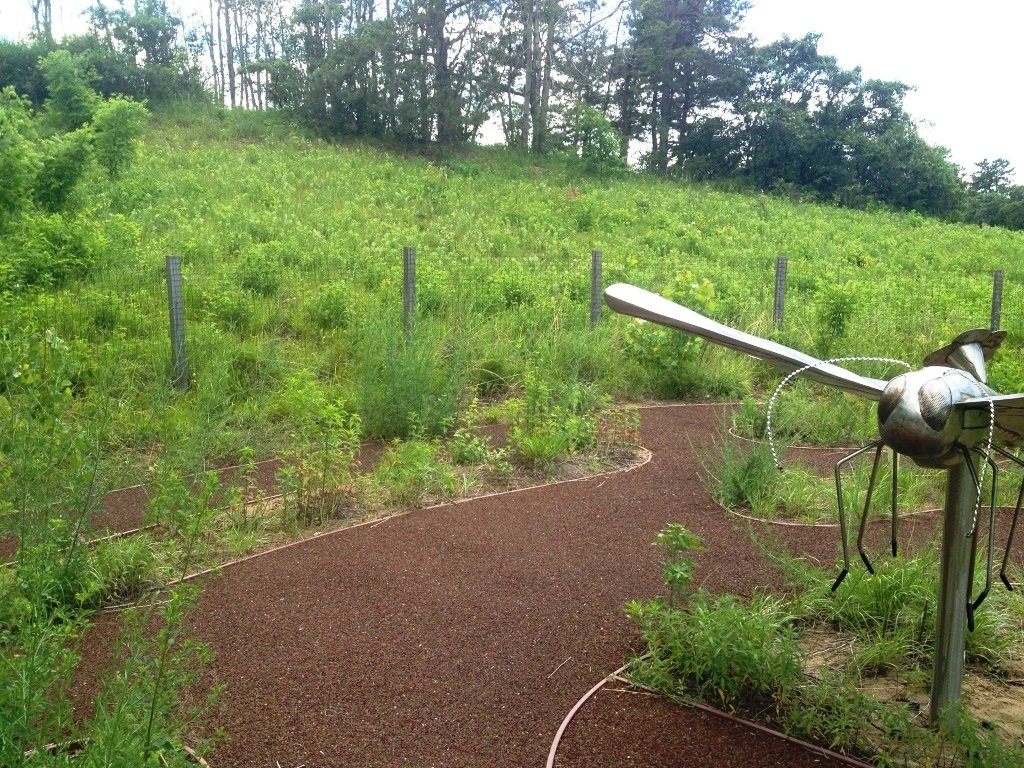
Porous Pavement Trail in Albany, NY

I stopped by the Albany Pine Bush Discovery Center today since it wasn't too far from my hotel. The site has some porous pavement trails that I wanted to check out after looking into some green infrastructure sites in the Hudson Valley. Based on information available from the NYSDEC website, this type of porous pavement mixture includes recycled tires. The function is the same concept as I discussed in my previous post, except the mixture may differ especially for proprietary products such as this one. There are many others as well that involve the use of recycled glass, etc.

For more information on this site, see this link: NYSDEC Albany Pine Bush Discovery Center Porous Pavement.

I am now off to my vampire oversight shift!

 Here are some photos I took:


Enjoy!

Saturday, May 26, 2012

Porous (Permeable, Pervious) Pavement

Last year, I was part of a project where we designed a porous pavement system as part of the stormwater management plan, which was constructed late last year (videos at the end of this post if you do not want to read).

Typical Porous Pavement Cross-Section

 Image Source: NJDEP BMP Manual

As the name suggests, this type of asphalt or concrete mixture allows for infiltration of stormwater through the surface layer compared to traditional pavement (IMpervious). This is another example of green infrastructure technology "mimicking" the natural hydrologic cycle. Essentially, stormwater will infiltrate into the surface where the reservoir base course layer will temporarily provide storage prior to allowing stormwater to seep into groundwater through the uncompacted subgrade (groundwater recharge). Layer thickness, porous asphalt mixture, different configurations, types of material for your base course, addition of underdrains, etc. are site-specific.

Porous pavement systems have been successfully installed throughout the U.S.  Porous pavement systems can reduce stormwater runoff volume, rate and provide water quality benefits. If you have a project where you are proposing additional impervious areas already, you should definitely consider porous pavement as part of the stormwater management plan.

Of course, before you consider porous pavement, there are several site-specific conditions that must be met. These include, but are not limited to:

  • load-bearing and infiltration capacities of subgrade,
  • anticipated load and volume of traffic in proposed condition,
  • anticipated use of the proposed site (e.g., do not install in areas with potential for spills and leakages of hazardous materials such as industrial and commercial areas),
  • seasonal high groundwater table (groundwater separation criteria - typically the min. is at least 2-3 ft.),
  • surface slopes (site grading),
  • consideration for maintenance (must be committed to maintain the system), etc.
Below are two videos of the constructed porous pavement system from the project I worked on:


Enjoy!