Friday, October 5, 2012

Stormwater Wetlands (VIDEO)


Stormwater Wetland in the Bronx

Nice video on the newly constructed stormwater wetland at the New York Botanical Gardens. According to the NYCDEP Press Release, Southern Boulevard was subject to frequent flooding in the past among other related issues. Now, new catch basins have been installed to convey stormwater runoff into the constructed stormwater wetland prior to discharging into downstream waterbodies. 

  • Reduction of urban flooding - CHECK 
  • Treatment of stormwater runoff at the source - CHECK 
  • Reduction of downstream erosion - CHECK 
  • Reduction of CSO - CHECK 
  • Creation of open space - CHECK 
  • Increase in habitat diversity - CHECK 
  • Educational Platform - CHECK


Marrying natural principles in urban settings is what green infrastructure is all about. Enjoy!

Sunday, September 30, 2012

Civil Engineers Part II


Check out the news article above (click the link). Sounds like good news! I know many fresh graduates have been struggling in this market, but apparently "the job outlook is promising for civil engineers". 

While I was reading the article, I thought I'd create a post and share some of my limited insight for newly graduating civil engineers (this is just my opinion and views). 

We all know as civil engineers (as stated in the article above as well), you need to be very strong in mathematics and science. It is extremely important you are an analytical thinker, detail-oriented, have clear communication skills and the list goes on and on. These are must-have skill sets you need to bring to the table. As you hone your skill sets to become a civil engineer, also consider the following advice, which  I feel are not emphasized enough or at all. 

Area of Specialty
Find it! Do whatever is necessary to find your area of interest. Civil engineering is a very broad field. Civil engineering branches off into multiple disciplines such as water resources, transportation, geotechnical, structural, etc. Within these multiple disciplines, it branches off into  further specialty areas. Gone are those days when a civil engineer can be "the jack of all trades". Yes, our civil engineering fathers were able to do it. It is mind boggling how to this day, we are using the theories and equations developed by these geniuses who never had the luxuries we take for granted - technology. 

I believe finding your "area" is very important and the earlier, the better because quality experience is important in our career. If it wasn't for my early internship experience, I would have never found my passion for water resources. When I was a freshman, I thought civil engineering = structural engineering. 

Pay Attention in College
Sometimes, I hear experienced engineers telling younger engineers that you never use what you learned in school. 

I strongly disagree. Pay attention to the fundamentals taught by your professors. We are supposed to be strong thinkers and problem solvers. Knowledge is power in our industry. We have been blessed with technology, however, without understanding the fundamentals and where and what equations you are using and how it is being applied and derived from, you would simply be "plugging and chugging" a.k.a blindly inputting numbers. Garbage in = garbage out. 

Advice: save your textbooks, at least the ones that are focused on your discipline.

Find a Mentor
It is important you find a mentor especially in your young career. Unfortunately, finding that mentor may not be easy or available. A mentor would provide you with valuable inputs from his or her experience, sound technical advice, career advice, etc. Don't mistaken this person to be someone who you expect to spoon-feed you in your career. No one is going to spoon-feed you. Your engineering career is ultimately up to you. 

Passion
This one is, in my opinion, the most important. This probably applies to all professions as well. I feel this is not stressed enough for civil engineers. Without it, you will not survive in this industry because you won't enjoy it. There will be many times of high stress, high demands and pressure, long hours, etc. And let's face it, everyone cares about salary and there are people that are in it for the money. Well, let me tell you what they don't tell you in undergrad. You're not going to be making banker money. You really have to enjoy what you do. As a civil engineer, you have great responsibilities that will have an impact on society. You will deal with complex problems that you need to solve (sometimes may even bother you so much you can't even sleep). The reward may not (will never) be a million dollar bonus, but you will know you are part of a profession planning and designing the infrastructure our society can't live without. 

Just my 2 cents... this post is a work in progress. I will continue to add to it. 

Friday, September 28, 2012

It just won't work...

Hello everyone, 


My blog probably screams green infrastructure. There has been so much hype and many regulatory agencies now require developers to incorporate it into the design. As much as I am a proponent of it, there are times when it just won't work! You can't just blindly place bioretention areas, rain gardens, porous pavement, bioswales, etc. all over your site because it's cool or it's good marketing. Without strong investigation of the soils and site conditions and even longer term maintenance considerations, it can FAIL! 

The major component is infiltration. If the underlying soils are poor in terms of infiltration (generically speaking - C and especially D soils), how will infiltration work? If you have shallow groundwater, your system may be saturated at all times (hence groundwater separation). Also, on a volume based approach, remember you are not going to be detaining runoff generated from the 100 year storm event. You would be using these techniques to meet WQv requirements (in New York State, 90% rule), especially for bioretention areas, etc. Rule of thumb on volume based approach is the 95% rule (rainfall events < or = to the 95% percentile event). Another important consideration is your surrounding infrastructure. 

It's a bummer though when you have a large site with so much space for green infrastructure implementation, but its all C and D soils and after numerous boring logs, groundwater data and perc tests to confirm, it's just not feasible. Also, keep in mind that subsurface investigation needs to be well prepared. I remember one time when my geotechnical professor said to be very careful when encountering perched water table. It is very true. 

Anyways, a solid site assessment and early planning is key. Also, once it's successfully designed and installed, it's not over! Maintenance.... ooh.... the dreaded word.... I know most people hate the word maintenance like oil changes for a car. But this is a commitment to a more sustainable environment!

There was a good post on LinkedIn related to this matter titled "can green storm water designs aggravate basement flooding" under the Sustainable Stormwater Group. You should check it out. A lot of great points made in the discussion thread. 

Monday, September 10, 2012

Green Infrastructure Courses offered in NYC


Green Infrastructure Courses offered by Pratt Institute in NYC. I haven't seen a curriculum focused specifically on green infrastructure before. Pretty cool, eh? I tried attending one of the courses earlier in the year, but it was cancelled last minute. The program is being re-offered for the Fall semester.

Link to the course registration: Pratt Registration


Sunday, September 9, 2012

The Lost Valley


I was reading a blog post on New Jersey Infrastructure and came across this video titled "The Lost Valley: Rising Water, Sinking Hopes" focusing on the serious flooding issues at the Borough of Manville in Central New Jersey. It's a very sad and a very real problem. According to the National Flood Insurance Program (NFIP) statistics, floods are the number one most common natural disasters in the U.S. 

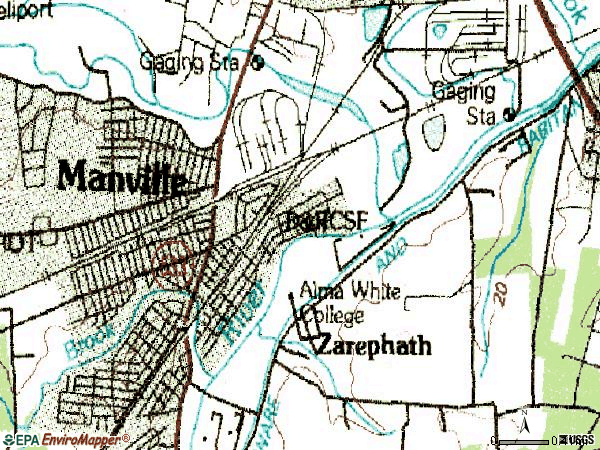
Borough of Manville - USGS Quad Map
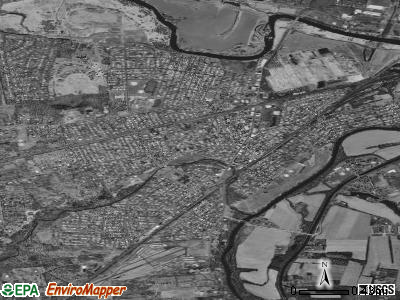
Borough of Manville - Aerial Imagery
As you can see on the images above, the Borough is surrounded by waterways: the Raritan River, Millstone River and Royce Brook. The "Lost Valley" is the eastern portion of the Borough bounded by the railroad tracks and Millstone River. I remember awhile back, I was in nearby Bound Brook taking water quality measurements during a heavy rainfall and it was rough - local roads and properties flooded, bubbling manholes, etc. I remember the water surface elevation was just flirting with the low chord of one of the bridges I was taking measurements from. Serious stuff. 

Well, check the video out if you haven't already. A well-made video on promoting awareness of a very serious problem. 


Tuesday, August 7, 2012

Rain Tax

"Your Stormwater Dollars"

Hi All,

I came across a simple, yet effective video on stormwater (see above) developed by the City of Durham in North Carolina. I thought it was a creative way to explain the effects of urban stormwater to the general public. Everyone loves cartoons and visuals! Often times, many engineers and scientists (engineering stereotypes must have stemmed from somewhere) become enmeshed in the technical details without being able to clearly convey the message. I'll admit, at times it happens to me as well. That's when I think of Tiger Woods saying "K.I.S.S. = Keep it Simple Stupid". Okay, I really don't think of Tiger Woods, but you get the point.

Anyways, the purpose of the video is to explain to the local citizens the reason for the City of Durham's stormwater tax and where all the money goes. Honestly, this is pretty new to me, mainly because we do not have a fee or tax directly supporting the maintenance of stormwater infrastructure in the city I reside in. But, from what I am researching online, there are several local municipalities throughout the U.S. imposing a tax for stormwater services. In general, the tax rate is directly related to the amount of impervious areas within a property/residential unit. Well, this topic is very controversial so I won't dive deeper. All I will say is, stormwater infrastructure is very important!

http://www.cityoftyler.org/Portals/0/uploads/departments/Stormwater/Images/About_Stormwater.jpg
Source: http://www.cityoftyler.org

Enjoy!


Tuesday, July 10, 2012

Raindrops Keep Fallin' on my Head...

Random, but related...

Passaic River Basin Flood Preparedness Workshop
Very good presentations from the workshop focusing on the Passaic River Basin. Check out the link above. Presentations by the speakers can be downloaded by clicking their names (it took awhile for me to figure that out...). Many topics focusing on green infrastructure. 

From Presentation "USGS Involvement in the PRB" by Heidi Hoppe

I was reading an interesting article titled "The Energy Balance Method of Stormwater Management" from this month's STORMWATER MAGAZINE when this image captured my attention:
This office complex is on green infrastructure steroids! It's the Wetland Studies and Solutions, Inc.'s HQ building in Virginia. For more information, check it out on ASCE.

By the way, if you are a stormwater professional and have not subscribed to the Stormwater Magazine, you definitely should. Great articles and best of all, it's FREE! STORMWATER

Until next time, good night or good morning?